
A catalogue, not a blank text box
Services and products are published as orderable items, so people pick what they need instead of describing it. Fewer requests come back for clarification because the form already asked the right questions.
Publish a catalogue people can actually order from, then let rules route, approve and close the routine requests on their own. Access, hardware, onboarding, a parking pass, all in the same queue as your incidents.
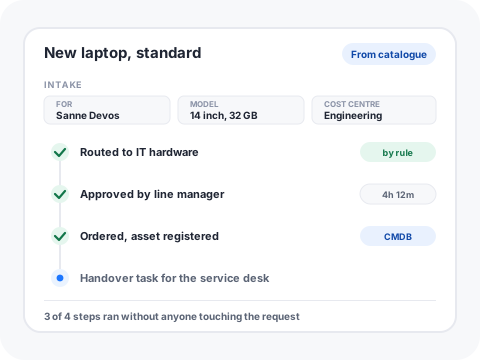
Services and products are published as orderable items, so people pick what they need instead of describing it. Fewer requests come back for clarification because the form already asked the right questions.
Each request type carries its own questions, required fields and defaults, so a laptop request collects the model and the cost centre while an access request collects the system and the reason.
Approval is a status in the workflow, with the approver, the timestamp and the time it took recorded on the request. No more chasing a decision that lives in somebody's inbox.
Onboarding is never one job. A single request fans out into the tasks it actually needs, each routed to its own workgroup, and closes when they are all done.
A parking pass, a laptop and a broken radiator land in the same system with the same SLA logic, so nobody has to know which department owns which form.
Request targets run on the same SLA engine as incidents, including business hours and holiday calendars, so a Friday afternoon order is not marked late on Monday morning.
When the answer already exists, the AI hands it over and no request is created. What is left is the work that genuinely needs a person or an order.
Because the catalogue item carries its price and its cost centre, fulfilled requests feed straight into the finance structure instead of being reconstructed at quarter end.
No. Requests are the same records as your incidents, with their own types, templates and workflows. One queue, one SLA engine, one reporting model.
Yes. Approval is a status in the request's workflow, so you decide per request type whether it needs one, and the approver and approval interval are recorded on the record.
Yes. Rules can fan a request out into tasks, each with its own workgroup and due date, and the request closes when the last one is done. That is how onboarding runs.
No. Pricing is per agent and end-users are unlimited, so opening the catalogue to your whole organisation does not change what you pay.
Book a discovery call and we will model two of your own request types during the session.
Schedule discovery call