


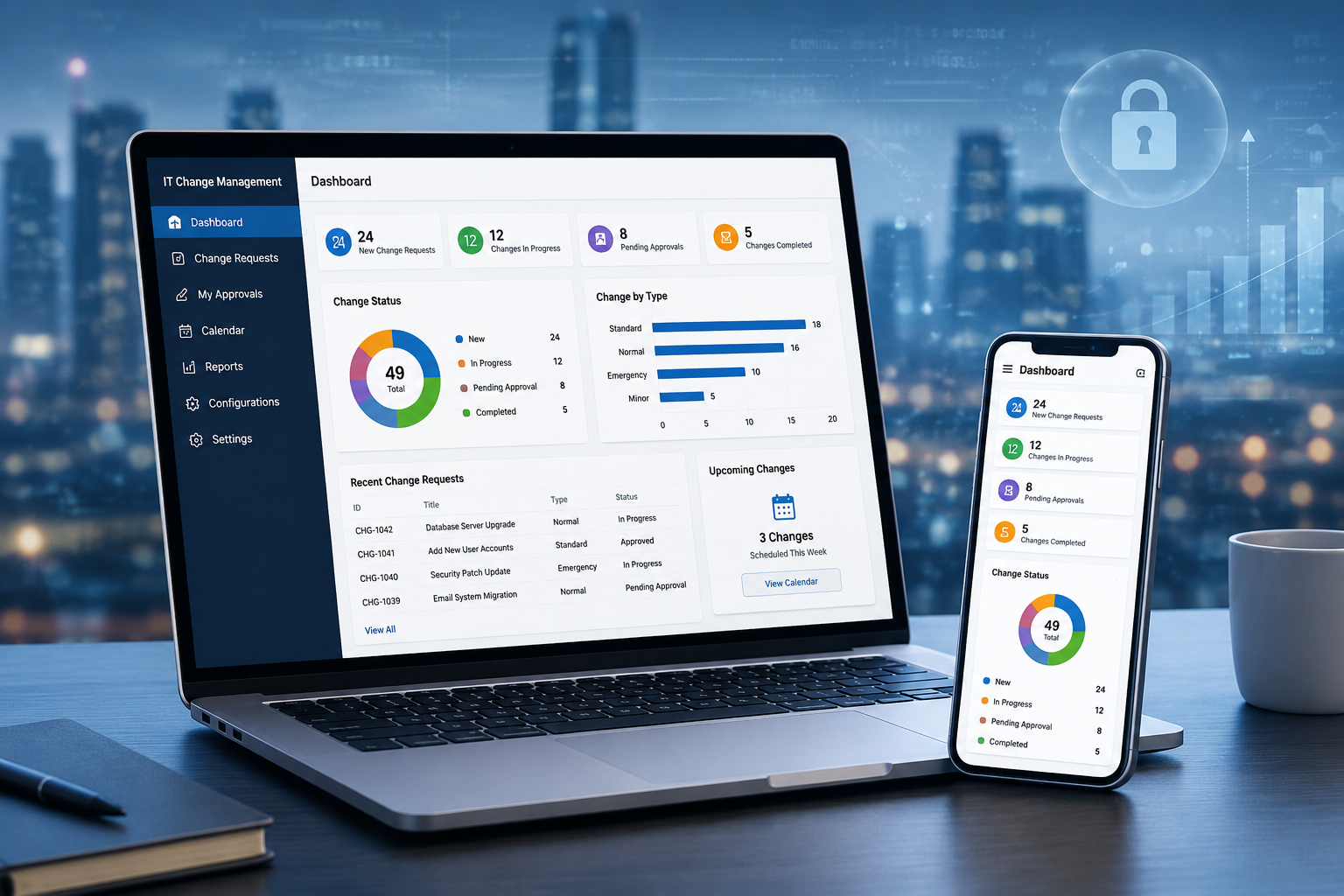
Modern businesses across the UK are rapidly adopting digital systems to improve efficiency, security, and customer experience. From cloud migrations to software upgrades and infrastructure modifications, organisations constantly make changes to their IT environments. While these changes are necessary for growth, they also introduce serious operational and security risks when not managed properly. This is why IT change management has become one of the most important parts of modern IT Operations.
Many companies now rely on IT change management software UK solutions to control, monitor, and document changes across their systems. Without a structured process, even a small system update can lead to downtime, data loss, compliance issues, or disruptions in business operations. As businesses become more dependent on digital infrastructure, the risks associated with poor change management continue to grow.
Why IT Change Management Matters for UK Businesses
IT change management is the process of planning, approving, implementing, and monitoring changes within an organisation’s IT environment. This can include software updates, server modifications, network changes, cybersecurity improvements, or infrastructure upgrades. The goal is to minimise disruption while ensuring systems remain stable and secure.
In many UK organisations, IT environments are becoming increasingly complex. Businesses often operate across multiple locations, remote teams, cloud systems, and integrated applications. Without proper IT Management Tools, tracking these changes manually becomes difficult and risky.
A poorly managed IT change can interrupt critical business services, affect employee productivity, and damage customer trust. For industries such as healthcare, finance, logistics, and retail, system failures can lead to financial losses and compliance concerns. This is why businesses are investing heavily in ITSM solutions to create more structured and automated workflows.
The Growing Risks in IT Operations
As digital transformation accelerates across the UK, IT Operations teams face increasing pressure to deploy updates quickly while maintaining system reliability. Speed often becomes a challenge when businesses prioritise rapid deployment over careful testing and planning. One common issue is insufficient risk assessment before implementing changes. Many organisations underestimate how one system modification can affect connected applications, databases, or network infrastructure. Even a simple update can create compatibility issues or unexpected service outages if dependencies are not properly analysed.
Another major challenge involves communication gaps between departments. In many businesses, IT teams, facility management teams, and operational departments work separately without complete visibility into planned changes. This lack of coordination increases the risk of service interruptions and delays in issue resolution.
Businesses using outdated systems also face additional risks during upgrades or migrations. Legacy infrastructure may not integrate smoothly with modern applications or cloud platforms. Without reliable IT change management software UK solutions, organisations may struggle to identify system vulnerabilities before deployment.
Cybersecurity Risks During IT Changes
Cybersecurity has become one of the biggest concerns in modern ITSM environments. Every system change introduces potential security risks if not properly monitored and tested. Misconfigured servers, unpatched applications, or unauthorised access permissions can create vulnerabilities that attackers exploit.
UK businesses increasingly face ransomware attacks, phishing attempts, and data breaches targeting weak IT infrastructures. During software deployments or infrastructure modifications, security gaps often appear temporarily. If these gaps are not identified quickly, organisations become exposed to cyber threats.
This is why many companies integrate security monitoring into their IT change management processes. Modern IT Management Tools now include automated approvals, audit trails, and compliance tracking to reduce human errors and improve visibility. Businesses adopting automated ITSM platforms can identify unusual system behaviour faster and respond to incidents more effectively.
The Impact on Facility Help Desk and Support Teams
Poor change management does not only affect technical teams. It also creates major challenges for Facility Help Desk operations and internal support departments. When system changes are implemented without proper communication or documentation, support teams often receive a sudden increase in complaints and service requests.
Employees may lose access to essential applications, experience connectivity issues, or face interruptions in workplace systems. This affects overall productivity and places additional pressure on help desk teams trying to resolve unexpected issues quickly.
For businesses managing multiple offices or remote work environments, these disruptions can become even more difficult to control. Facility Help Desk teams need real-time visibility into planned IT changes so they can prepare support responses in advance. Modern ITSM platforms help bridge this gap by improving collaboration between IT Operations and support teams.
Compliance and Regulatory Challenges
UK businesses operating in regulated industries must also manage compliance risks related to IT changes. Data protection laws, cybersecurity regulations, and operational standards require organisations to maintain detailed records of system modifications and approvals.
Without structured change management processes, businesses may fail compliance audits or struggle to investigate incidents properly. Missing documentation or unauthorised changes can create serious legal and operational consequences.
Many organisations now use IT change management software UK platforms to maintain audit trails, track approvals, and ensure accountability throughout the change lifecycle. Automated workflows reduce manual errors and provide better visibility for compliance reporting.
The Future of IT Change Management in the UK
As organisations continue investing in cloud computing, automation, and remote infrastructure, IT change management will become even more important. Businesses are moving toward AI-driven ITSM platforms that provide predictive analytics, automated risk detection, and smarter workflow management.
Modern IT Management Tools are no longer limited to ticketing systems. They now help organisations monitor infrastructure performance, manage security risks, improve communication, and support faster decision-making across IT Operations.
UK businesses that adopt proactive change management strategies can reduce downtime, improve system reliability, and strengthen cybersecurity protection. By combining automation, visibility, and structured approval processes, organisations can manage digital transformation more safely and efficiently.
Conclusion
The risks in IT change management UK businesses face today are growing alongside digital transformation. Poor planning, weak communication, cybersecurity vulnerabilities, and compliance failures can all create serious operational disruptions. As IT environments become more complex, businesses need structured and automated approaches to manage changes safely.
Using reliable IT change management software UK solutions helps organisations improve visibility, reduce downtime, and strengthen IT Operations. Combined with modern ITSM practices and advanced IT Management Tools, businesses can manage change more confidently while supporting long-term growth and operational stability.