


IT operations management has become a mission critical function for organisations across the UK. With increasing cloud adoption, hybrid working models, and rising cybersecurity risks, IT teams need a structured and efficient way to run day to day operations while supporting long term digital transformation.
For UK enterprises, the goal is clear: improve service reliability, optimise resources, maintain compliance, and deliver seamless digital experiences for employees and customers. This is where a strong IT operations management strategy can make all the difference.
In this guide, we break down what IT operations management really involves, why it matters for UK organisations, and how AI powered tools and automation can reshape IT service delivery for the better.
What is IT operations management
IT operations management (ITOM) refers to the processes and systems used to monitor, control, and support an organisation’s IT infrastructure. This includes managing servers, networks, applications, cloud resources, IT service requests, and user support.
A well designed ITOM framework helps businesses in the UK:
- Maintain uptime and reliability
- Improve IT service quality
- Reduce operational and support costs
- Detect and resolve issues faster
- Strengthen cybersecurity and compliance
- Make data driven decisions
With the right tools, IT departments can automate daily tasks, minimise manual errors, and gain full visibility into their infrastructure.
Why IT operations management matters for UK companies
In the UK market, where businesses rely heavily on digital systems and cloud platforms, IT operations teams face growing complexity. From hybrid office setups to remote access and third party integrations, there are more moving parts than ever.
Strong IT operations management helps UK businesses:
- Keep systems running without interruption
- Respond quickly to user requests
- Manage software licences and hardware resources efficiently
- Stay compliant with UK regulations such as GDPR
- Improve customer satisfaction with smoother digital journeys
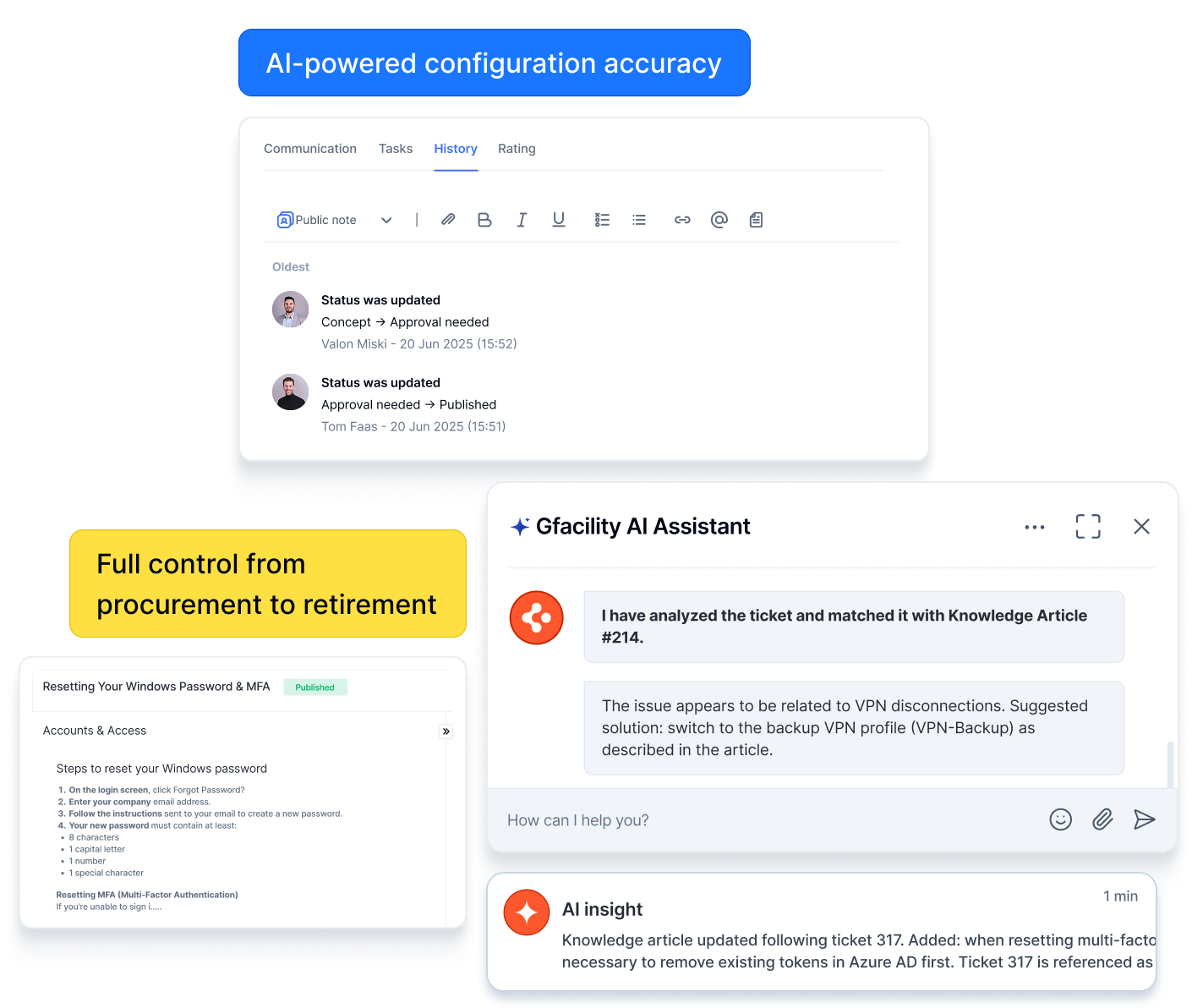
Many UK companies are now adopting modern ITSM solutions like Gfacility to streamline operations and automate routine processes.
Best practices for successful IT operations management
1. Prioritise automation
Automation reduces the burden on IT staff by handling repetitive tasks such as ticket routing, system monitoring, software updates, and backend workflows.
2. Use real time monitoring tools
Real time alerts help UK IT teams identify anomalies before they impact business operations.
3. Implement a unified IT service management platform
A centralised system like Gfacility brings together incident management, service requests, IT asset tracking, and workflow automation in one place.
4. Adopt ITIL aligned processes
ITIL is widely used across UK organisations. Following ITIL guidelines helps create structured workflows and predictable outcomes.
5. Integrate AI for predictive insights
AI is transforming IT operations by predicting outages, analysing user behaviour, identifying security risks, and helping IT teams respond faster.
FAQs
Q1. What is the main function of IT operations management
Its core function is to ensure that IT systems, services, and infrastructure run smoothly, securely, and without unnecessary downtime.
Q2. How does Gfacility support IT operations teams
Gfacility offers a full suite of IT service management tools that streamline incident handling, automate workflows, track assets, and provide real time visibility across the IT environment.
Q3. Does IT operations management reduce operational costs
Yes, by automating processes, optimising resource usage, and preventing costly downtime, ITOM can significantly reduce operational expenses.
Q4. Can small UK businesses benefit from IT operations management
Absolutely. Even small businesses with limited IT staff can use ITOM tools to improve reliability, manage assets, and automate daily tasks.
Q.5 How does AI help in IT operations management
AI predicts issues, automates ticket classification, enhances security monitoring, and improves incident resolution times.
Final thoughts
IT operations management is essential for any organisation relying on technology, especially in the UK where digital transformation is advancing rapidly. By embracing automation, AI, and structured service management processes, businesses can enhance performance, reduce downtime, and ensure a seamless user experience.
Platforms like Gfacility IT Service Management empower IT teams to operate more efficiently and deliver consistent value across the business.