


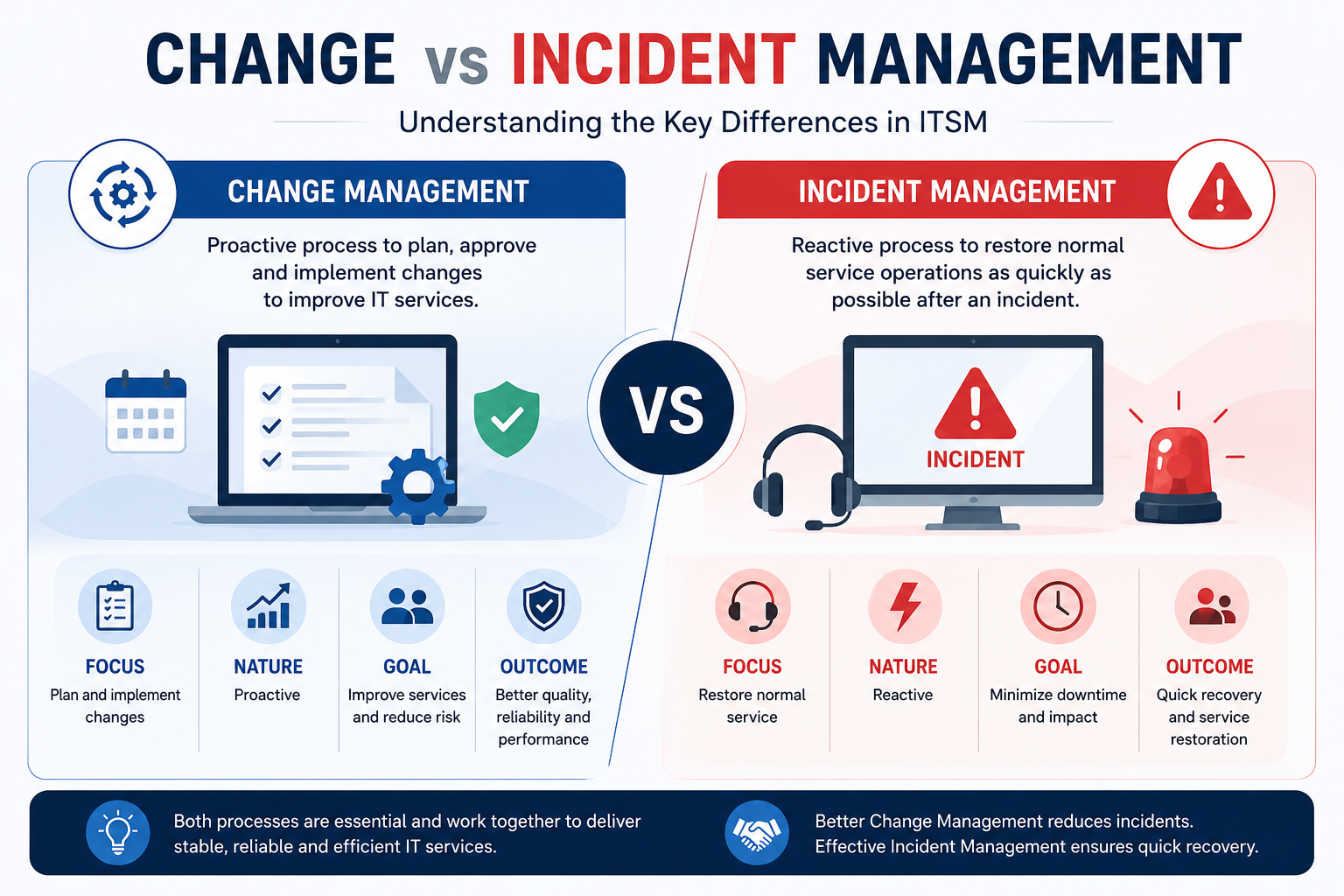
Businesses today rely heavily on stable and secure IT systems to keep operations running smoothly. When systems fail or updates create unexpected disruptions, organizations need structured processes to manage both situations effectively. This is where change management and incident management become essential parts of IT operations. Companies using IT change management software UK solutions are increasingly focusing on balancing system improvements with operational stability.
Although both processes are connected within IT service management, they serve completely different purposes. Understanding the distinction helps organizations reduce downtime, improve service delivery, and maintain better control over their IT environment.
What Is Incident Management?
Incident management focuses on restoring normal IT services as quickly as possible after an unexpected disruption occurs. An incident may include server failures, application crashes, network outages, email issues, cybersecurity events, or software malfunctions that affect business operations.
The primary goal of incident management is rapid resolution. IT teams work to identify the issue, minimize business impact, and return systems to normal performance levels. Organizations across the UK often depend on structured workflows and automated monitoring systems to detect incidents early and respond efficiently.
Modern businesses use advanced change management tools UK providers offer alongside incident management systems to ensure operational continuity. Incident management is reactive by nature because it addresses issues after they occur.
What Is Change Management?
Change management focuses on planning, approving, implementing, and monitoring modifications within an IT environment. These changes may involve software updates, infrastructure upgrades, security patches, cloud migrations, hardware replacements, or configuration adjustments.
Unlike incident management, change management is proactive. The objective is to reduce the risk associated with changes while ensuring improvements are introduced in a controlled and secure manner. Businesses using IT change management software UK platforms can track approvals, schedule maintenance windows, document risks, and monitor implementation outcomes.
Effective change management helps organizations avoid unexpected service disruptions caused by poorly planned updates or unauthorized modifications.
The Core Difference Between Change and Incident Management
The biggest difference between the two processes lies in their purpose. Incident management deals with restoring services after a disruption, while change management focuses on safely introducing modifications before problems occur.
Incident management is typically urgent and time-sensitive. When a critical system fails, IT teams prioritize rapid restoration. Change management, however, follows a structured approval process designed to reduce risks before implementation.
For example, if a company’s website suddenly crashes, the IT support team immediately begins incident management procedures to restore access. If the organization plans to upgrade its hosting infrastructure next month, that activity falls under change management.
Businesses adopting IT change control UK frameworks often integrate both functions to improve overall IT governance and operational resilience.
Why Businesses Need Both Processes
Organizations cannot rely on only one of these systems. Incident management alone creates a reactive environment where teams constantly fix issues without addressing root causes. On the other hand, focusing only on change management without incident response leaves businesses vulnerable during unexpected outages.
A balanced IT strategy combines both approaches. Incident management ensures rapid recovery during disruptions, while change management reduces the likelihood of incidents occurring in the first place.
Many UK enterprises now invest in integrated change IT management tools UK businesses can use alongside service desk platforms, monitoring systems, and automation technologies. This combination improves visibility across IT operations and strengthens compliance processes.
How Poor Change Management Causes Incidents
One of the most common causes of IT incidents is poorly controlled system changes. Unapproved software updates, incorrect configurations, incomplete testing, or rushed deployments can create major disruptions across business systems.
Without proper IT change control UK procedures, even minor updates may lead to downtime, data loss, or performance failures. This is why structured approval workflows, risk assessments, rollback planning, and testing environments are critical within change management practices.
Organizations using reliable IT change management software UK platforms can reduce failed changes significantly by automating documentation, approvals, and deployment tracking.
The Role of Automation in IT Operations
Automation is transforming both incident and change management processes. Modern IT teams rely on automated alerts, AI-driven monitoring, ticket routing, and workflow approvals to improve response times and reduce manual effort.
In incident management, automation helps detect problems faster and assign issues to the correct support teams immediately. In change management, automation simplifies approval chains, maintenance scheduling, compliance reporting, and audit tracking.
Businesses adopting advanced change management tools UK providers offer are gaining better operational efficiency while minimizing human error.
Compliance and Risk Management Benefits
Regulated industries such as healthcare, finance, logistics, and government organizations require strict documentation and accountability for IT activities. Proper change management creates clear audit trails for every modification made within the IT environment.
Similarly, incident management provides visibility into system failures, response timelines, and resolution procedures. This information becomes valuable during compliance reviews and security investigations.
Using professional IT change management software UK solutions allows organizations to maintain better governance while meeting industry standards and regulatory requirements.
Improving IT Stability Through Integrated Management
The most effective organizations do not treat change management and incident management as separate systems. Instead, they integrate both processes into a unified IT service management strategy.
When incidents occur repeatedly, IT teams can investigate whether recent changes contributed to the issue. Likewise, incident data helps identify weak areas requiring long-term infrastructure improvements through controlled changes.
Modern IT change control UK strategies emphasize collaboration between support teams, operations staff, security teams, and management to improve overall service reliability.
Choosing the Right IT Management Solution
Selecting the right platform is essential for businesses aiming to improve operational control. A strong solution should support change approvals, incident tracking, automation, reporting, compliance management, and risk analysis within a centralized system.
Organizations across the UK are increasingly adopting scalable change management tools UK businesses can customize according to operational requirements. These solutions help reduce downtime, improve accountability, and strengthen IT governance across growing digital environments.
Conclusion
Change management and incident management are both critical components of modern IT operations, but they serve different purposes. Incident management restores services after disruptions, while change management ensures updates and modifications are introduced safely and efficiently.
Businesses implementing structured IT change management software UK systems can reduce operational risks, improve service availability, and maintain stronger control over their IT infrastructure. By combining proactive change management with responsive incident management, organizations create a more stable, secure, and resilient IT environment prepared for long-term growth.