


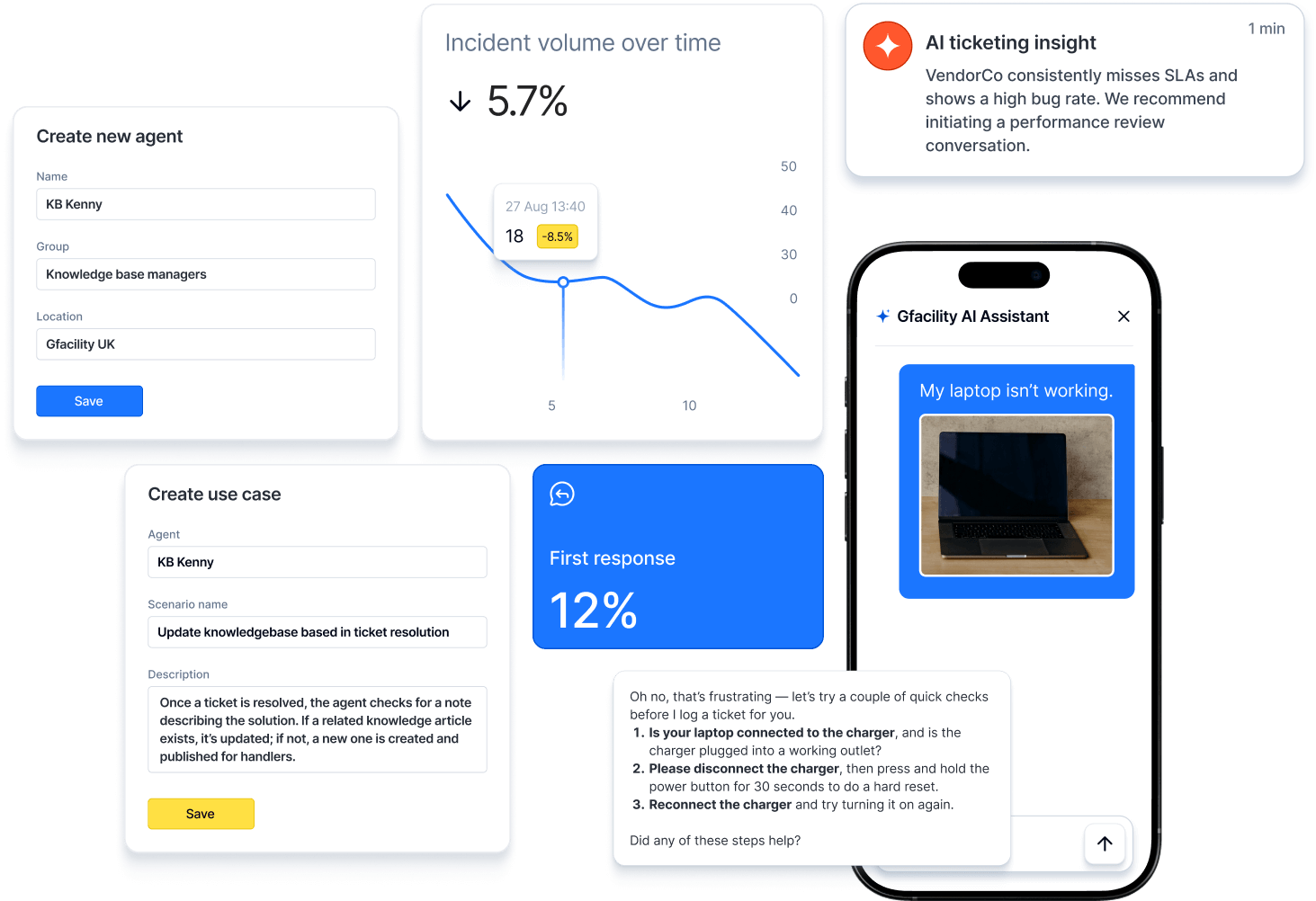
Modern IT operations management has evolved into a data-driven discipline where every decision whether it’s capacity planning, incident response, or service reliability, depends on measurable insights. Growing organisations are increasingly adopting intelligent monitoring tools and automation platforms to streamline performance, reduce disruptions, and enhance service quality.
To create complete alignment with strategic business goals, IT leaders must focus on a clear set of metrics that reflect system health, operational maturity, and long-term scalability. This article explores the metrics that matter most and why tracking them is essential for ensuring resilience in today’s fast-moving digital environment.
Why metrics matter in it operations management
As environments become more complex, IT teams need structured visibility across systems, workflows, and service dependencies. AI-powered analytics now play a major role in identifying patterns, predicting failures, and accelerating root-cause analysis.
Tracking the right metrics helps organisations to:
- Minimise downtime through proactive monitoring
- Optimise resource utilisation
- Improve automation performance
- Strengthen change and incident response
- Enhance service reliability for end-users
Strong metrics form the backbone of high-performing IT operations initiatives especially for businesses scaling their digital footprint in the UK.
Key metrics every it operations leader should track
1. Mean Time to Detect (MTTD)
This measures how quickly the team identifies an issue. A lower MTTD demonstrates better visibility and monitoring maturity. With AI-driven alerting and predictive insights, anomalies can be flagged before they impact users.
2. Mean Time to Resolve (MTTR)
MTTR defines how long it takes to fully resolve an incident. It is one of the most critical IT operations KPIs because it directly affects service continuity. Automated workflows and intelligent triaging significantly reduce MTTR by eliminating delays in diagnosis and escalation.
3. System Uptime & Service Availability
High availability is fundamental to business continuity. Tracking uptime ensures that core applications, servers, and services perform consistently. Modern platforms use automation to self-heal, rebalance workloads, and prevent outages before they occur.
4. Change Success Rate
Poorly planned changes often trigger incidents. Monitoring the success rate of implemented changes helps IT teams minimise disruption. AI-supported change management tools provide impact predictions, dependency mapping, and automated rollbacks to reduce risk.
5. Incident Volume & Categorisation
Tracking total incident volume enables leaders to pinpoint recurring problems and prioritise improvements. AI-based classification tools automatically group incidents by type, urgency, and root cause, making response strategies faster and more accurate.
6. Capacity Utilisation Metrics
Understanding storage, compute, and network utilisation helps teams ensure systems operate efficiently without waste. Predictive forecasting tools identify upcoming resource shortages, enabling smarter planning and cost control.
7. Automation Coverage Rate
With automation now central to modern IT operations, tracking which workflows are automated and how effectively provides insight into operational maturity. Higher automation coverage reduces errors, speeds up routine tasks, and frees teams for strategic work.
FAQ
What are the most important IT operations metrics?
Metrics like MTTR, MTTD, uptime, and change success rate are essential for tracking reliability, performance, and service stability.
How does AI improve IT operations management metrics?
AI enhances anomaly detection, speeds root-cause analysis, and supports predictive maintenance, helping teams improve key KPIs.
Why is MTTR so important to IT leaders?
MTTR has a direct impact on service availability and user experience, making it a core metric for operational success.
How can automation help IT operations teams?
Automation reduces manual effort, improves accuracy, and accelerates response workflows, boosting overall efficiency.
Conclusion
Effective IT operations management relies on a balanced combination of intelligent metrics, real-time visibility, and AI-supported decision-making. By focusing on key indicators such as MTTR, MTTD, change success rate, and automation performance, IT leaders can strengthen resilience, improve service reliability, and support long-term organisational growth.
These metrics don’t just guide daily operations they form a strategic foundation that empowers teams to work smarter, adapt faster, and maintain consistent excellence across the technology landscape.