


IT change management has become a crucial part of digital operations for UK businesses. With constant updates, security patches, new integrations, and cloud migrations, organisations need a structured way to manage change without interrupting business continuity.
This is where change management software offers unmatched value.
Today’s UK businesses rely on multiple tools, hybrid networks, remote users, and continuous releases. Even a small unplanned change can trigger downtime, service disruption, or security vulnerabilities. By adopting modern change management practices and automated workflows, companies can minimise these risks and improve overall system reliability.
What is IT change management
IT change management is the structured process used to plan, approve, implement, and review changes within an organisation’s IT environment.
A change may include new software, upgrades, patches, configuration updates, cloud deployments, security changes, or infrastructure enhancements.
For UK companies, effective change management ensures:
- Minimal disruption to live services
- Reduced risk during updates
- Faster approval workflows
- Better compliance with UK standards
- Smoother coordination between IT teams
Improved service quality and user experience
Why UK businesses need it change management software
Manual change tracking through spreadsheets or emails is no longer sustainable. With increasing system complexity and cybersecurity threats, organisations need intelligent tools that automate the entire change lifecycle.
Benefits of dedicated it change management software include:
- Automated risk assessment for proposed changes
- Clear approval workflows
- Real time collaboration between teams
- Integration with incident and problem management
- Full audit logs for compliance
- Faster deployments with reduced errors
- Predictive insights powered by AI
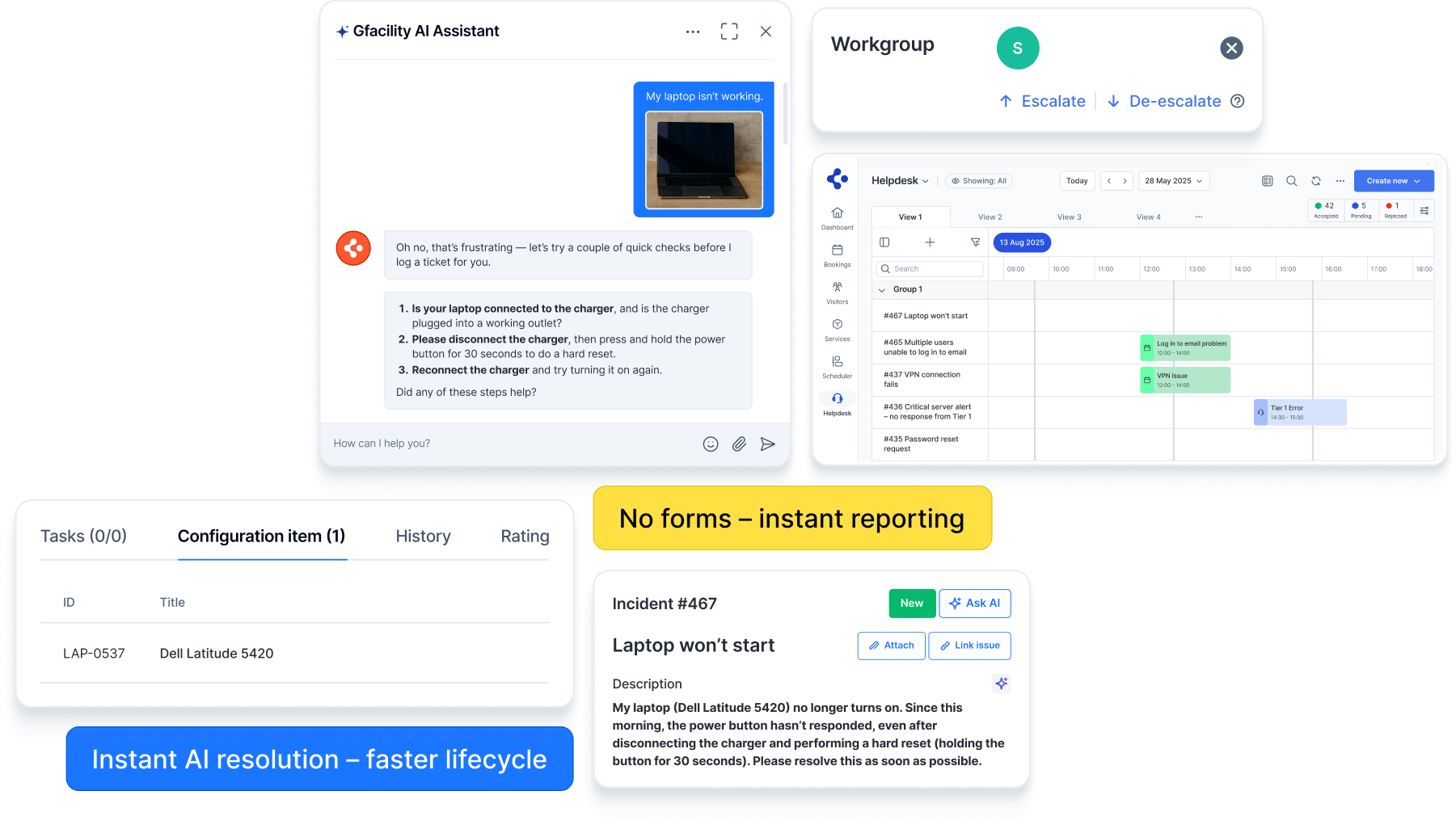
Platforms like Gfacility help UK IT teams handle change requests more efficiently while ensuring complete visibility and traceability.
Key features to look for in it change management software
Centralised change logging
All change requests must flow through one unified system for complete transparency.
Automated approval workflows
Software that routes change requests to the right stakeholders saves time and reduces bottlenecks.
Risk and impact analysis
Predictive insights help teams understand how each change may affect live services.
Real time notifications
Alerts keep all teams informed about approvals, rejections, changes in schedule, and potential conflicts.
Integration with ITSM and asset management
A connected system prevents incompatible changes and reduces configuration drift.
Reporting and audit trails
Essential for UK compliance frameworks including GDPR, ISO 27001, and internal audits.
The rise of AI in IT change management
AI powered tools are transforming how UK organisations handle IT changes.
AI enables:
- Predictive risk scoring
- Automated dependency mapping
- Faster approval decisions
- Smart conflict detection
- Auto generated remediation plans
This shift towards AIOps allows IT departments to implement changes with greater confidence and fewer disruptions.
FAQs
Q1. Why is change management important in IT
It ensures that updates and deployments happen without affecting system performance or business operations.
Q2. Can change management software prevent outages
Yes, by providing risk analysis, scheduling, and structured approvals, the software significantly reduces the chance of change related outages.
Q3. How does Gfacility support IT change management
Gfacility enables automated workflows, approval chains, auditing, and integration with ITSM modules to ensure smooth and safe change implementation.
Q4. Who is responsible for approving IT changes
Approvals are usually handled by the Change Advisory Board, IT managers, and service owners depending on the type of change.
How does change management reduce downtime
By assessing risks, coordinating stakeholders, and controlling deployment timing, change management prevents unexpected outages.
Is IT change management part of ITIL
Yes, it is a key ITIL process that supports service stability and continuous improvement.
Which software is best for change management
Popular options include Gfacility, ServiceNow, BMC Helix, Freshservice, and ManageEngine.
Final thoughts
For UK organisations striving for stability, agility, and compliance, adopting the right it change management software is essential. With automated workflows, AI driven insights, and seamless integration with IT service management tools, businesses can reduce risks and maintain consistent service performance.
Gfacility offers a powerful, modern solution that enables faster, safer, and smarter change management for today’s digital environment.